Cognition, Ethology and Animal Welfare
This research project was conducted at the Petit Far West equestrian centre in Le Pin (Seine-et-Marne, France) as part of the Human-Animal Relationship University Diploma (DU) under the academic supervision of Carlos Pereira (Sorbonne Nouvelle University / Institute of Portuguese Equestrian Art) and Kader Abdel Ikhlef.The core subject focused on studying the cognitive abilities, behaviour, and welfare of three rescued dromedary camels : Ramsès, Khéops and Khéphren using applied ethology and positive enrichment methods.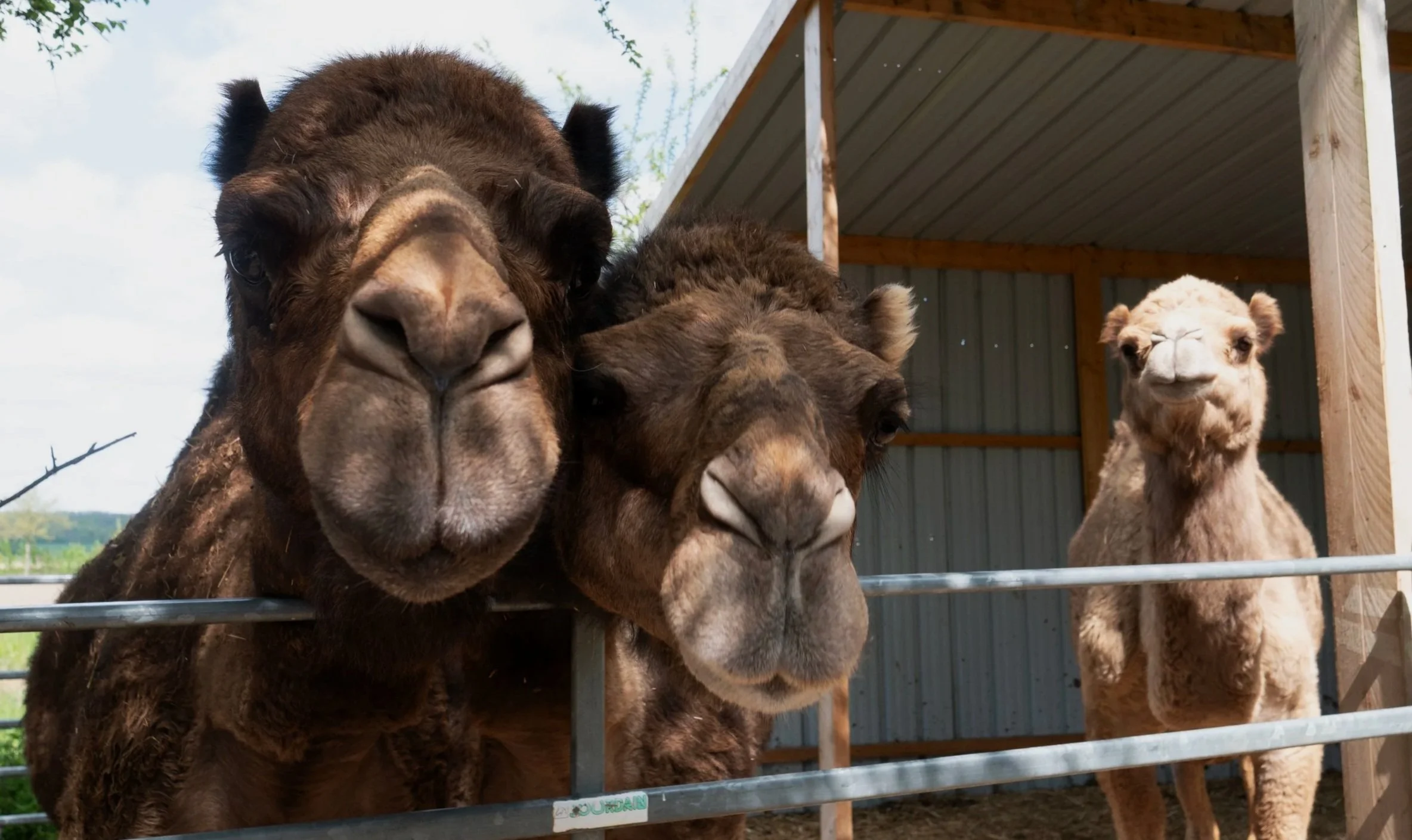
Khéops, Khéphren, and Ramsès in their paddock
Cognitive Tasks and Voluntary Participation
The cognitive protocol adapted the principles of the "Arena System", an experimental touch-panel methodology originally created by primatologist Professor Tetsuro Matsuzawa (Kyoto University) for chimpanzees, and later adapted for horses by Carlos Pereira.
Using a portable magnetic board as a physical precursor to digital touchscreens, the camels were introduced to visual symbol discrimination tasks (distinguishing between shapes like circles and crosses, as well as Arabic characters) paired with clicker training and fruit rewards.
Key Ethological Findings:
• Rapid Symbol Recognition: All three camels demonstrated remarkable visual discrimination skills, quickly learning to avoid incorrect symbols without physical compulsion.
• The Power of Freedom & Choice: Initially, tasks were conducted with the camels held on halters, which often triggered mild frustration or disinterest. Transitioning the setup to open pasture with total freedom of movement radically altered their behaviour: when free to choose whether to approach the board or walk away, the camels showed a dramatic increase in motivation and curiosity.
They voluntarily approached the task upon hearing the clicker, proving that agency and voluntary engagement enhance cognitive performance and well-being far more than physical restraint.
• Individual Cognitive Profiles: Each dromedary displayed distinct learning dynamics. Khéops and Khéphren adapted quickly with high problem-solving focus, whereas Ramsès was more contemplative and required a low-pressure, individualised approach.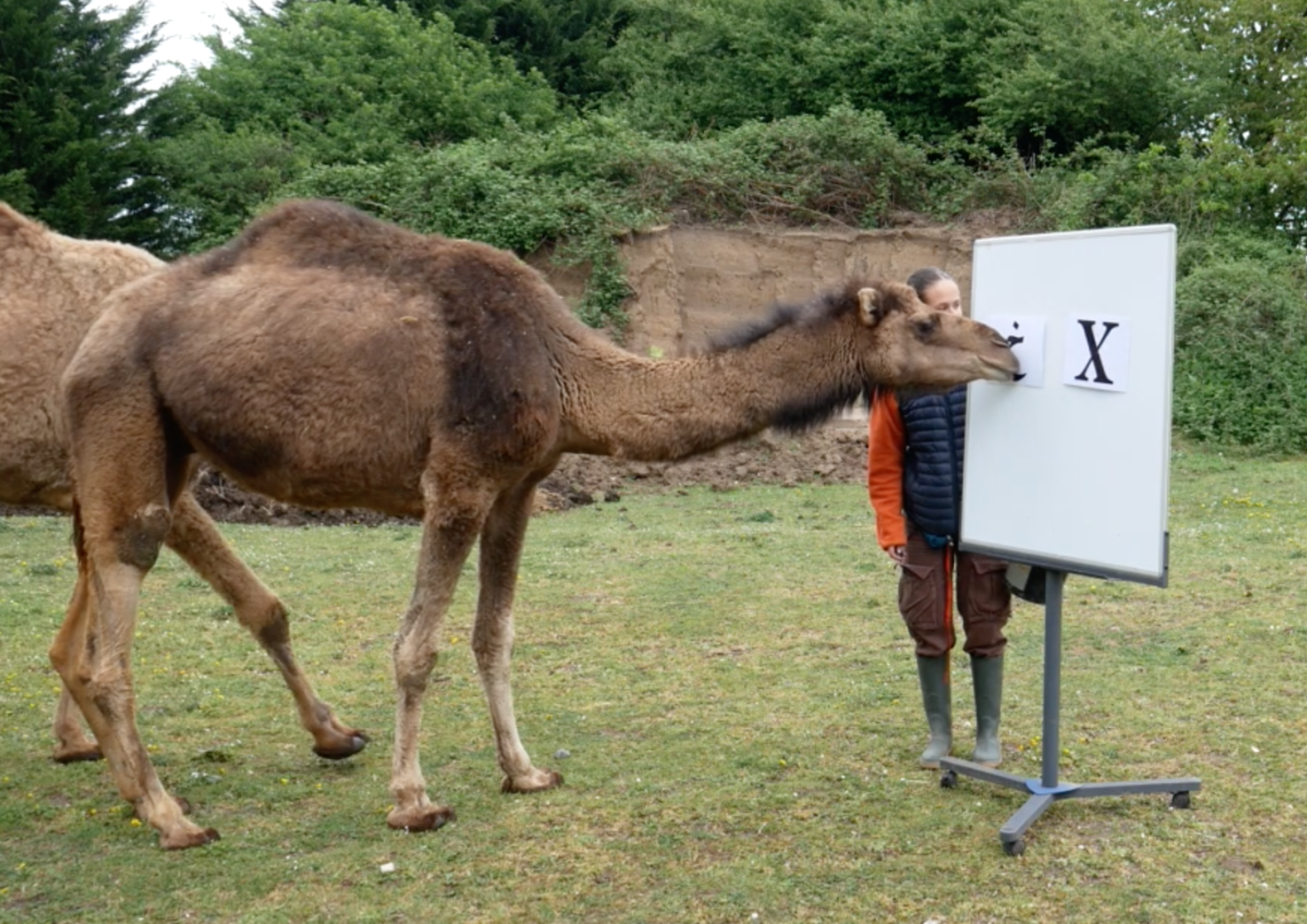
Free-choice experimental setup in the pasture with Khéphren
Animal Empathy and Field Experience: The Incident with Khéops
While caution is necessary to avoid uncritical anthropomorphism, field realities often reveal profound emotional sensitivity in animals. On the final official day of the internship, an unexpected car horn repeatedly blasted near the enclosure, triggering a sudden panic in the group. Positioned behind the camels, I was knocked to the ground by their sudden retreat.What followed demonstrated extraordinary spatial awareness and restraint:
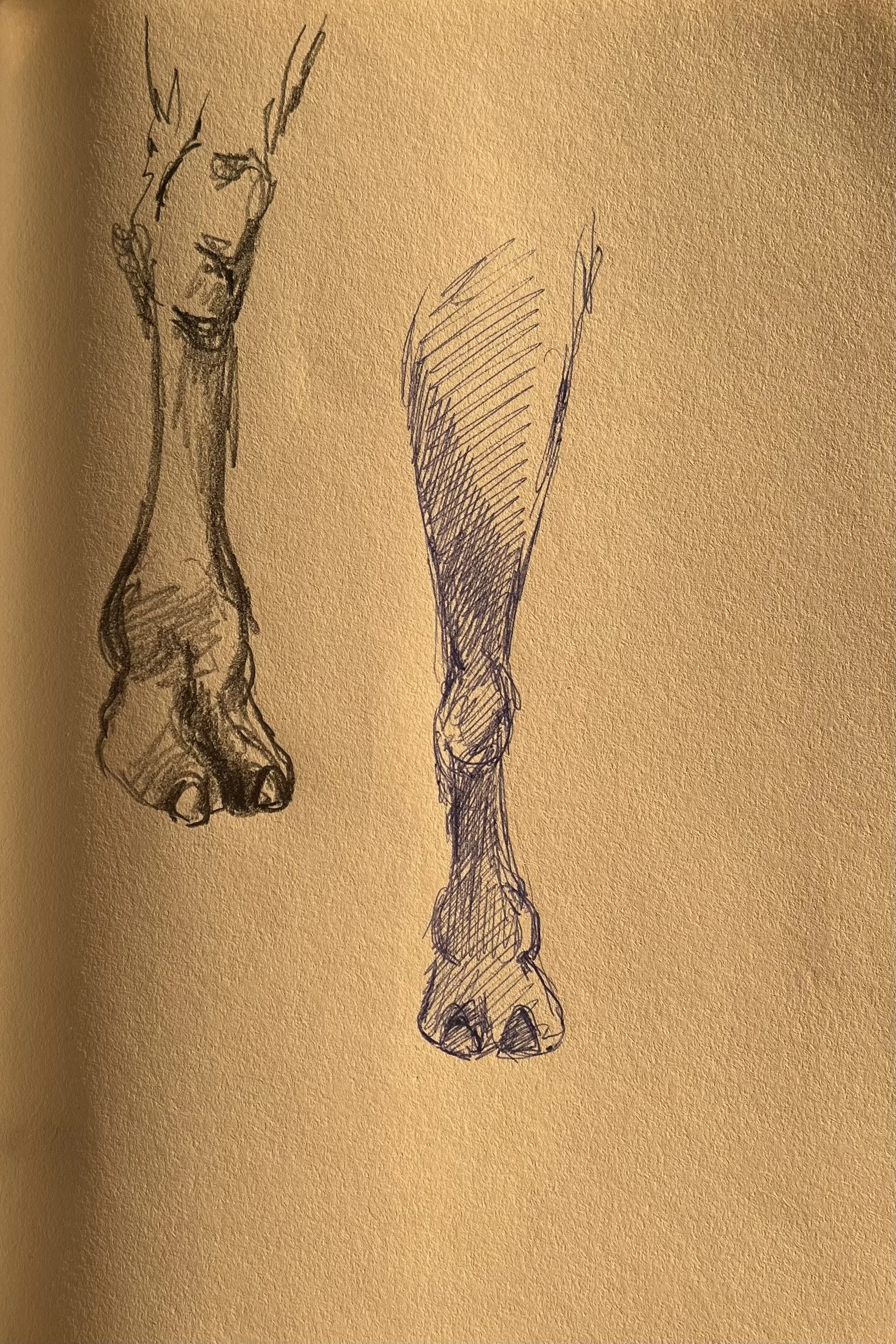
As Khéops backed over me, his heavy hoof was about to land directly on my body. Upon hearing my shout, he abruptly froze his foot mid-air, refusing to put his weight down, and stepped around me to avoid injury. Immediately after the panic subsided, Khéops walked straight back to me moving with unusual urgency and lengthily sniffed me to check my condition.This event, along with moments of deep non-verbal connection with Carlos Pereira’s blind Lusitano horse, Bemposto, highlights the complex emotional capacities, potential empathy and subtle awareness present in these animals.Qualitative Field Observation and the Role of Art
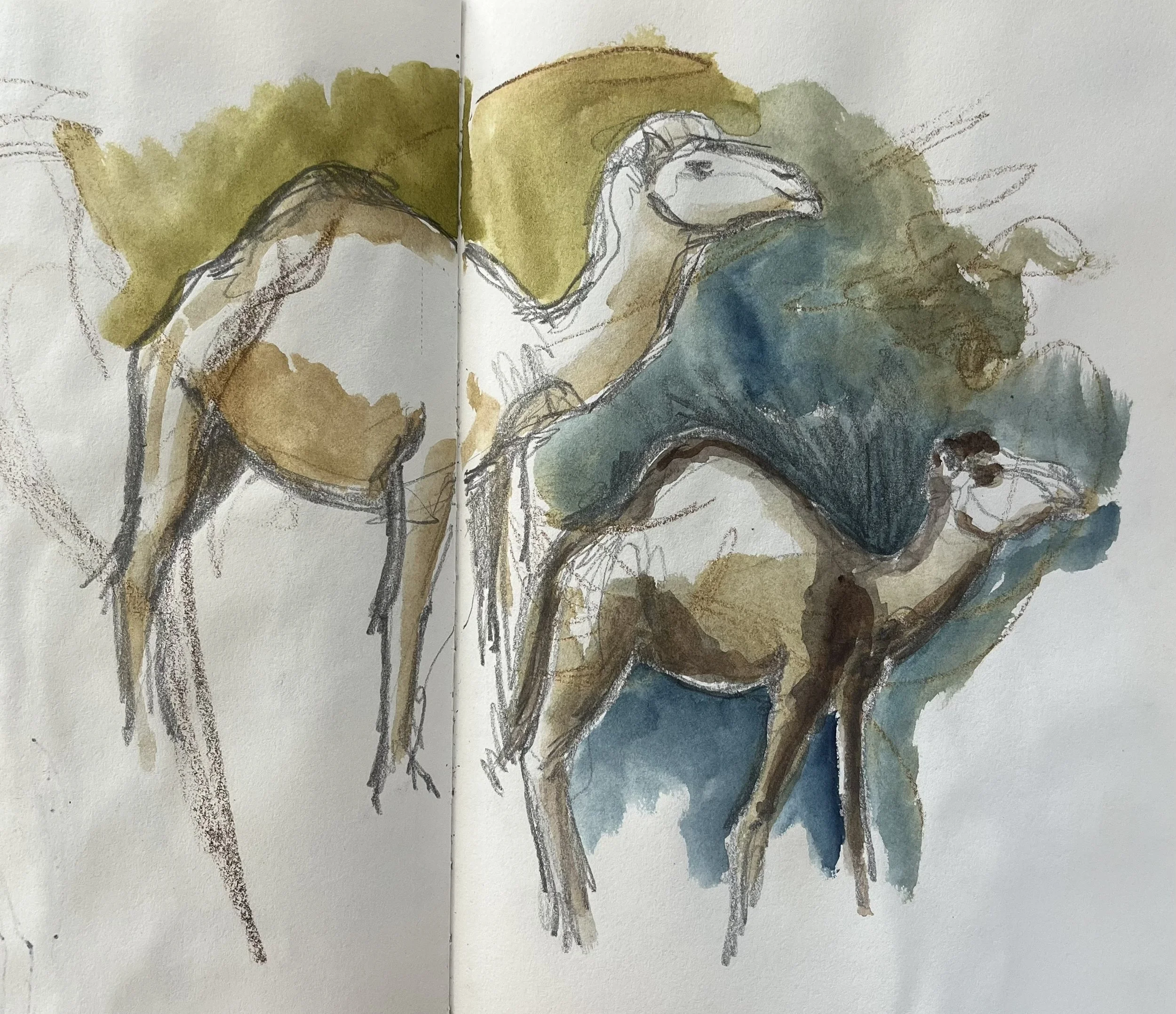
Daily afternoon sessions were dedicated to qualitative ethological observations in open pastures, where the camels could move freely, graze, sunbathe, and sand-roll.Drawing from prior fieldwork observing Chacma baboons in South Africa, a strictly objective, non-intrusive observational posture was maintained. However, this scientific approach was enriched by an artistic perspective:• Observational Drawing: Sketching the camels live in their environment forced a slower, more detailed examination of their morphology and subtle movement. For example, live drawing revealed Ramsès playfully chasing a small bird around his feet a spontaneous interaction easily missed during standard observational counting.
• Photography and Video: Used as complementary tools, visual media allowed spontaneous field behaviours to be reviewed calmly post-session.Ethical Reflections and Future Horizons
While these three dromedaries were rescued from a circus and benefit from daily cognitive and physical enrichment, keeping desert-adapted animals in European captive environments raises ongoing ethical questions. True welfare requires respecting their individual choices, providing vast physical freedom, and adapting to their natural pace rather than imposing human expectations.