Fieldwork & Conservation in South Africa
My field experience in South Africa grounded my academic knowledge in real-world conservation and applied ethology. Through extended volunteer missions and field roles, I developed hands-on skills in wildlife monitoring, behavioural data collection, and sanctuary management across vast African ecosystems.Primate C.A.R.E. — Chacma Baboon Rehabilitation
Phalaborwa, South Africa (1,200 ha within a 40,000 ha reserve) Founded on the principle of proactive species preservation, Primate C.A.R.E. accommodates around 450 rescued Chacma baboons (Papio ursinus) across 28 troops.
Initial Mission & Nursery Work
• Nursery & Bonding Protocols: Participated in the hand-rearing and progressive social integration (bonding) of orphaned infants with surrogate mothers and larger troops.
• Daily Care & Enrichment: Prepared tailored nutrition, milk formulas, and designed environmental enrichments to stimulate natural foraging and social behaviours.
• Ethological Data Collection: Recorded daily social dynamics, troop interactions and behavioural responses.
• Community Outreach: Engaged with local communities and children to foster peaceful human-wildlife co-existence.
Return & Advanced Rehabilitation Work
Building on this initial work, I returned in 2026 to assist the Rehabilitation Manager, taking on increased responsibilities in data collection and team co-supervision:
• Primate Health & Body Condition Monitoring: Tracked physical health indicators, including body condition scoring and female sexual swelling stages to assess troop reproductive states, cycles and individual welfare.
• Troop Social Dynamics: Recorded fine-grained inter-individual interactions, dominance hierarchies and integration progress.
• Field Support & Co-Supervision: Assisted in co-ordinating daily volunteer workflows, nursery protocols and social bonding strategies.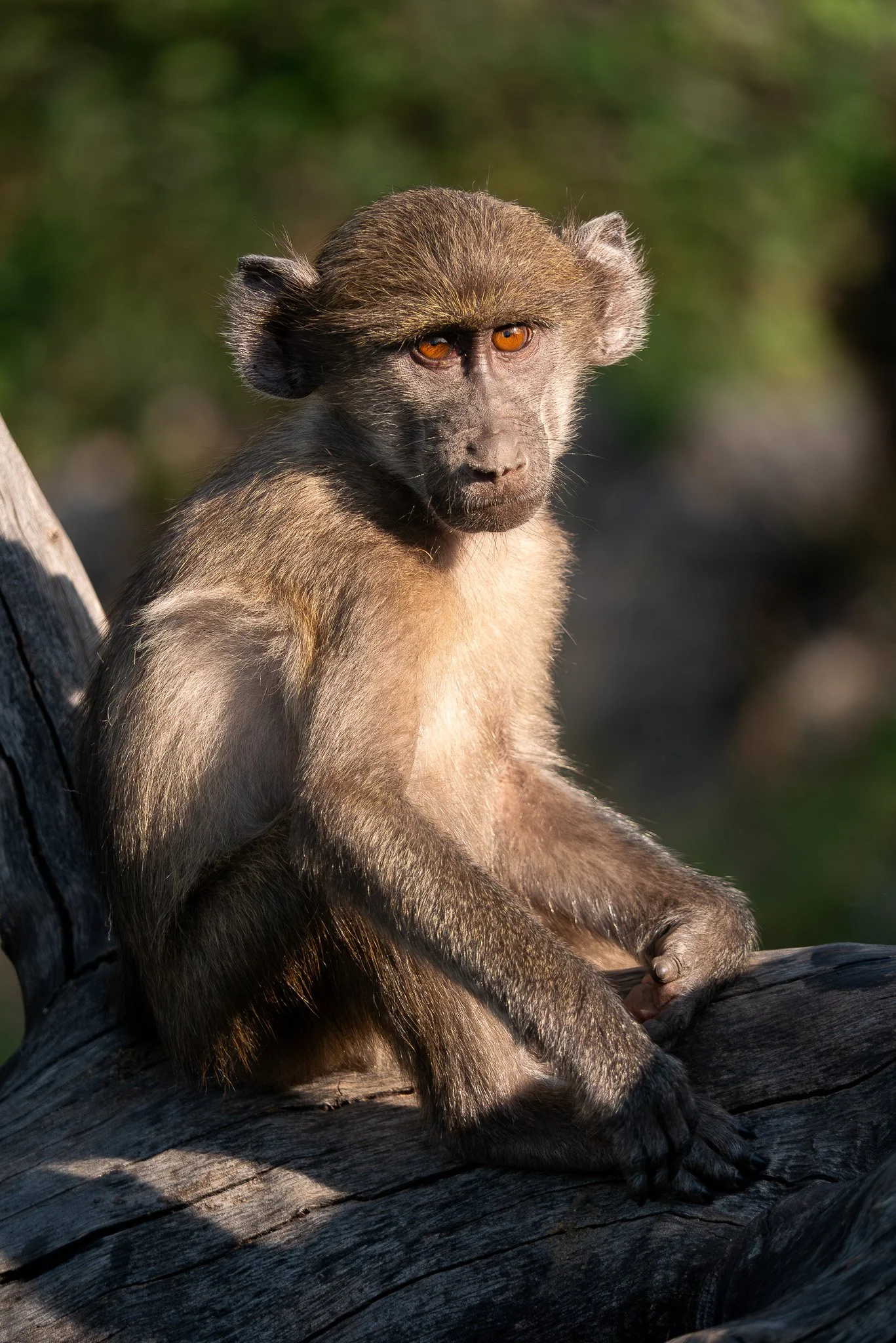
Chacma baboon (Papio ursinus) · South Africa
Siyafunda Conservation — Greater Makalali Reserve
Limpopo Province, South Africa (25,000 ha open wilderness)
Working alongside professional field rangers in a Big Five reserve, this mission focused on ethical wildlife monitoring and habitat management in a natural setting.Key Field Responsibilities
• Ethical Wildlife Tracking: Conducted twice-daily game drives and bush walks, learning to approach wild fauna respectfully on foot by analysing wind direction, scent dispersal, and subtle behavioural warning cues.
• Tracking & Spoor Identification: Identified animal tracks, territorial signs, and behavioural indicators in the wild.
• Data Collection & Research Support: Contributed to active conservation programs—including elephant contraception tracking and nocturnal species monitoring during night patrols.
• Habitat & Reserve Management: Participated in invasive plant control, soil erosion management, and ecological maintenance.
• Local Engagement: Completed introductory Zulu language modules and theoretical conservation workshops to better understand human-wildlife dynamics in local communities.These immersive field experiences solidified my expertise in naturalistic observation, behavioural data logging, and ethical wildlife handling. Observing animals in both rehabilitation sanctuaries and wild ecosystems deepened my understanding of animal behaviour. It reinforced my goal to combine neurobiology, field ethology and conservation science to protect species and their natural habitats.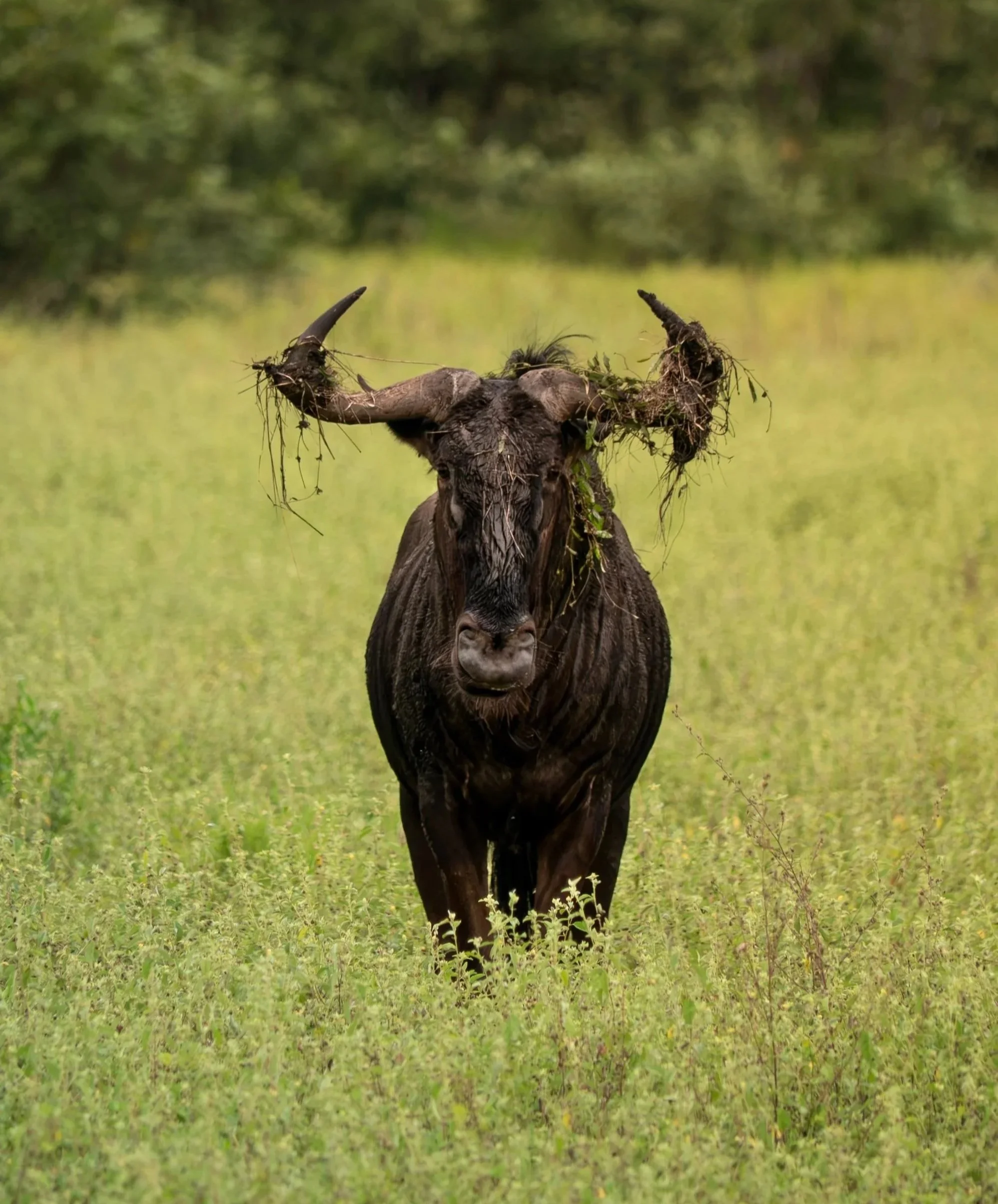
Lone blue wildebeest (Connochaetes taurinus) with horns crowned by grass after thrashing — South Africa